Cost Optimization in AWS for Java Applications: What We Learned the Hard Way
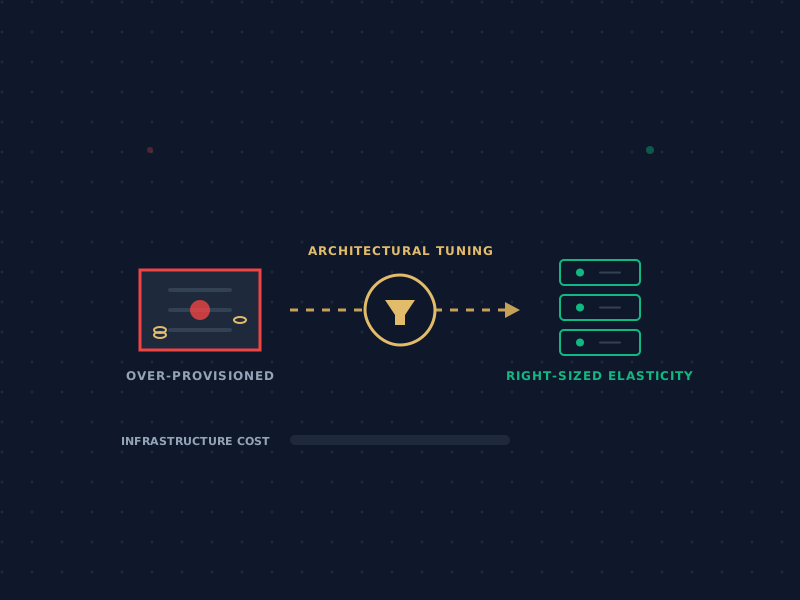
AWS makes it incredibly easy to get started.
Spin up instances, deploy services, connect databases and within days, you have a production-ready system. For startups and growing SaaS platforms, especially in regulated domains, this speed is invaluable.
But there’s a hidden tradeoff.
What starts as a flexible, scalable infrastructure can quickly turn into an unpredictable and escalating cost center.
In our experience working with Java-based systems, particularly Spring Boot applications deployed on AWS, cost optimization is rarely addressed early. And when it is, it’s often reactive rather than intentional.
This blog shares practical lessons from real-world systems: what drives cloud costs up, why common approaches fail and how to design for cost efficiency without compromising performance, scalability, or compliance.
The Hidden Nature of AWS Costs
Unlike traditional infrastructure, AWS costs are not always obvious.
They are distributed across:
- Compute (EC2, ECS, Lambda)
- Storage (S3, EBS, RDS)
- Networking (data transfer, NAT gateways)
- Managed services (CloudWatch, API Gateway, etc.)
The challenge is not just usage, it’s interaction between services.
For Java applications, especially those built with Spring Boot, inefficiencies in application design often translate directly into infrastructure waste.
Why Common Approaches Fail
1. Over-Provisioning “Just to Be Safe”
One of the most common patterns we see is provisioning for peak load, even when that load is rare.
- Large EC2 instances running at 10–20% utilization
- RDS instances sized for worst-case scenarios
- Always-on services without traffic awareness
This leads to consistent overpayment for unused capacity.
2. Ignoring Application-Level Inefficiencies
Cloud costs are not just an infrastructure problem, they’re an application problem.
Typical issues include:
- Inefficient database queries
- Excessive API calls between services
- Poor caching strategies
- Long-running synchronous processes
In Java applications, especially with ORM-heavy setups, unoptimized queries can significantly increase:
- CPU usage
- Memory consumption
- Database load
All of which translate into higher AWS bills.
3. Misusing Managed Services
Managed services like RDS, API Gateway and Lambda are powerful, but not always cost-efficient when used incorrectly.
Examples:
- Using API Gateway for high-throughput internal APIs
- Running Lambda for long-duration tasks better suited for containers
- Overusing NAT Gateways, leading to high networking costs
Convenience often comes at a premium.
4. Lack of Visibility and Cost Attribution
Many teams lack clear visibility into:
- Which service is driving costs
- Which feature or customer is responsible
- Where optimization efforts should focus
Without proper tagging and monitoring, cost optimization becomes guesswork.
A Better Approach: Designing for Cost Efficiency
Cost optimization should not be an afterthought, it should be part of your architecture from the beginning.
1. Right-Sizing Compute with Real Usage Data
Instead of provisioning based on assumptions:
- Use CloudWatch metrics to analyze actual utilization
- Continuously right-size EC2 or container workloads
- Leverage auto-scaling based on real traffic patterns
For many Java applications, tuning JVM memory and thread usage can significantly reduce instance size requirements.
2. Move Toward Containerization for Flexibility
Running Spring Boot applications on ECS or Kubernetes (EKS) allows:
- Better resource utilization
- Horizontal scaling
- Cost control through task-level allocation
Compared to static EC2 deployments, containers provide more granular control over compute usage.
3. Optimize Database Usage
Databases are often one of the largest cost drivers.
Key strategies include:
- Query optimization (avoid N+1 queries, reduce joins where possible)
- Connection pooling (e.g., HikariCP in Spring Boot)
- Read replicas for scaling read-heavy workloads
- Evaluating Aurora Serverless for variable workloads
Even small inefficiencies at the query level can scale into significant costs.
4. Introduce Caching Strategically
Caching is one of the highest ROI optimizations.
Using tools like Redis (ElastiCache):
- Reduces database load
- Improves response times
- Lowers compute requirements
The key is identifying:
- Frequently accessed data
- Expensive computations
And caching them effectively.
5. Reduce Networking Costs (Often Overlooked)
Networking costs, especially NAT Gateway usage, are frequently underestimated.
Common fixes:
- Use VPC endpoints for internal AWS service communication
- Avoid unnecessary cross-AZ or cross-region traffic
- Evaluate whether all services truly need private subnet routing
These changes can significantly reduce monthly bills without impacting performance.
6. Use Storage Intelligently
Not all data needs high-performance storage.
Strategies include:
- Moving infrequently accessed data to cheaper S3 tiers
- Using lifecycle policies for automatic transitions
- Avoiding over-provisioned EBS volumes
In regulated industry systems, where data retention is critical, this must be balanced with compliance requirements for data availability and integrity.
7. Implement Cost Observability
You cannot optimize what you cannot measure.
Best practices:
- Tag resources by service, environment and customer
- Use AWS Cost Explorer and budgets
- Set alerts for unusual spikes
For SaaS platforms, this also enables:
- Per-tenant cost tracking
- Better pricing strategies
Real-World Insight: Small Changes, Big Impact
In one of our engagements, a Spring Boot-based platform was running on oversized EC2 instances with inefficient database queries.
By:
- Optimizing queries
- Introducing caching
- Right-sizing instances
We reduced infrastructure costs by over 35% without any architectural overhaul.
The takeaway is simple: Cost optimization is often about fixing fundamentals, not introducing complexity.
Common Pitfalls to Avoid
- Treating cost optimization as a one-time activity
- Over-optimizing early without real usage data
- Ignoring application-level inefficiencies
- Blindly adopting serverless or managed services without cost analysis
- Failing to align cost decisions with compliance requirements
Compliance Considerations for Regulated domain systems
In regulated industry environments, cost optimization must not compromise:
- Data integrity
- Audit trails
- System validation (GxP)
For example:
- Archiving data must still meet retrieval requirements
- Logging must remain complete and tamper-proof
- Infrastructure changes must be documented and validated
Balancing cost and compliance requires careful architectural decisions.
Conclusion
AWS provides unmatched flexibility, but without discipline, it can become expensive very quickly.
For Java applications, especially those built with Spring Boot, cost efficiency is deeply tied to:
- Application design
- Infrastructure choices
- Observability practices
The most effective strategy is not aggressive cost-cutting, it’s intentional architecture.
Final Thought
The goal is not to spend less, it’s to spend wisely.
Organizations that build cost awareness into their systems early gain a significant advantage: better margins, predictable scaling and sustainable growth.
Related Insights
In the Age of AI, Human Accountability Is the Competitive Advantage
In regulated industries, AI accelerates delivery but cannot replace human accountability. Learn why operator-led engineering teams remain the critical differentiator.
The Hidden Cost of Outsourcing Your Business in India
Outsourcing can either accelerate your business or quietly weaken its foundation. Discover why small early decisions matter.
Start the Conversation
If you are a technology or engineering leader wondering when the right time is, what the right structure looks like, or whether the economics work at your scale, those questions are answerable. Not in a whitepaper, but in a direct conversation with engineers who don't just advise on capability centres, but actively build and operate them.
[email protected]No proposals. No scope documents. Just a direct conversation.