FastAPI vs Django for Real-World SaaS: Not a Benchmark, but a Decision Framework
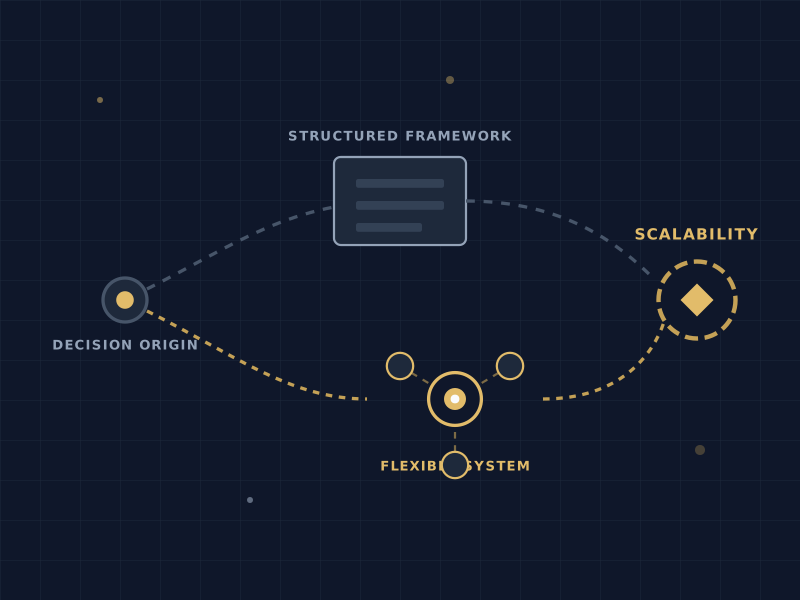
If you search “FastAPI vs Django,” you’ll find dozens of comparisons.
Benchmarks showing requests per second.
Async vs sync debates.
Performance charts.
But here’s the truth most of those articles miss:
Startups don’t fail because they picked the “slower” framework. They fail because they picked the wrong foundation for how their system evolves.
In real-world SaaS, your backend is not static. It grows, bends and sometimes breaks under new requirements.
So the real question is not:
“Which framework is faster?”
It’s:
“Which framework will survive the next 12 months of changes?”
This blog is about that decision.
The Wrong Way to Decide
Most developers approach this decision like a technical comparison.
They ask:
- Which one is faster?
- Which one handles more requests?
- Which one is more modern?
But SaaS systems don’t operate in isolation. They involve:
- Product changes
- Business logic complexity
- Data evolution
- Team constraints
A framework that performs well in benchmarks can still slow you down in real life.
Understanding the Philosophies
Before comparing use cases, you need to understand the mindset behind each framework.
Django: Structured, Opinionated, Product-Oriented
Django is built around a simple idea:
“Give developers everything they need to build a complete product quickly.”
Out of the box, you get:
- ORM tightly integrated with models
- Admin panel that works immediately
- Authentication system
- Migrations and schema management
- A clear project structure
This makes Django incredibly powerful for:
- Rapid development
- Standard SaaS features
- Teams that want convention over decision fatigue
But this strength can also become a limitation when your system needs to break out of that structure.
FastAPI: Flexible, Explicit, System-Oriented
FastAPI takes a different approach:
“Give developers control and let them design the system.”
It focuses on:
- High-performance APIs
- Async-first execution
- Type-safe request/response validation
But it deliberately avoids:
- Built-in admin
- Opinionated architecture
- Heavy abstractions
This means you have more freedom, but also more responsibility. FastAPI doesn’t tell you how to build your system, it expects you to know.
Where the Difference Actually Shows Up
The real difference between Django and FastAPI doesn’t show in benchmarks. It shows in how your system behaves as it grows.
Scenario 1: Building an MVP Under Time Pressure
Let’s say you’re building:
- User authentication
- Basic dashboards
- Admin control panel
- CRUD-heavy workflows
Your priority is simple: Launch fast and validate.
With Django:
- You get auth in hours, not days
- Admin panel is ready instantly
- Database integration is seamless
With FastAPI:
- You’ll spend time setting up basics
- You’ll make more architectural decisions early
- You’ll move slower initially
And in early-stage startups, reducing decisions is often more valuable than flexibility.
Scenario 2: Data-Heavy Systems and API Load
Now imagine your system evolves. You’re dealing with:
- Large datasets
- Complex queries
- Real-time updates
- High API traffic
This is where things start to shift.
Django can handle this but:
- Sync nature can become limiting
- ORM abstraction can introduce inefficiencies
- Scaling requires more tuning
FastAPI, on the other hand:
- Handles concurrent requests efficiently with async
- Gives you control over performance-critical parts
- Works well with microservices
Scenario 3: Complex Business Logic (Where Most Systems Struggle)
This is where your experience becomes highly relevant.
Let’s say you’re building:
- Rule engines
- Multi-level calculations
- Conditional workflows
- Data transformation pipelines
At this point, your logic is no longer tied directly to models and your system becomes computation-heavy.
In Django:
- Logic often gets mixed into models, views, or services awkwardly
- You fight the framework structure
In FastAPI:
- You design logic as independent layers
- Cleaner separation between computation and API
Scenario 4: Scaling a SaaS Product
As your product matures, new needs emerge:
- Independent services
- Background workers
- Event-driven processing
- Multiple teams working in parallel
Django can scale but it tends to start monolithic and requires effort to break apart later.
FastAPI naturally supports:
- Service-based architecture
- Lightweight APIs
- Independent deployments
The Hidden Costs Nobody Talks About
1. Django’s Hidden Cost: Over-Coupling
Because Django is tightly integrated:
- Models, views and logic become interdependent
- Refactoring becomes harder over time
You move fast early, but pay later if not careful.
2. FastAPI’s Hidden Cost: Decision Fatigue
With flexibility comes responsibility. You need to decide:
- Project structure
- Auth system
- Data handling patterns
- Service boundaries
This slows down early development if you’re not experienced.
What Actually Works in Real SaaS
In practice, most well-architected systems don’t choose one. They combine both.
A Practical Hybrid Architecture
A common and effective setup:
Django handles:
- Admin panel
- Authentication
- Core business entities
- Internal tools
FastAPI handles:
- High-performance APIs
- Data processing
- Async tasks
- Scalable services
This approach gives you speed where you need it and flexibility where it matters.
A Better Decision Framework
Instead of comparing frameworks, evaluate your situation:
- Stage 1: What is your immediate goal?
Validate idea → Django. Build scalable backend → FastAPI. - Stage 2: What is your system type?
CRUD-heavy → Django. Logic-heavy → FastAPI. - Stage 3: What is your team strength?
Django experience → Django. Async/system design experience → FastAPI. - Stage 4: How will this evolve?
Short-term MVP → Django. Long-term distributed system → FastAPI. - Stage 5: Can you adapt later?
You don’t need to get it perfect on day one. But you do need to avoid decisions that lock you in.
The Real Insight
Framework choice is not your biggest risk. Architecture is.
You can move from Django to FastAPI or split services over time. But you cannot easily fix poor data design, tightly coupled systems, or unclear boundaries.
Final Thought
FastAPI is not “better” than Django. Django is not “outdated.” They are tools designed for different problems.
The real skill is knowing: When to use structure and when to use flexibility.
Don’t choose a framework based on benchmarks. Choose it based on how your system will behave when it grows.
Related Insights
In the Age of AI, Human Accountability Is the Competitive Advantage
In regulated industries, AI accelerates delivery but cannot replace human accountability. Learn why operator-led engineering teams remain the critical differentiator.
The Hidden Cost of Outsourcing Your Business in India
Outsourcing can either accelerate your business or quietly weaken its foundation. Discover why small early decisions matter.
Start the Conversation
If you are a technology or engineering leader wondering when the right time is, what the right structure looks like, or whether the economics work at your scale, those questions are answerable. Not in a whitepaper, but in a direct conversation with engineers who don't just advise on capability centres, but actively build and operate them.
[email protected]No proposals. No scope documents. Just a direct conversation.