Role-Based Access Control in Spring: Designing Secure and Scalable Authorization for Modern SaaS
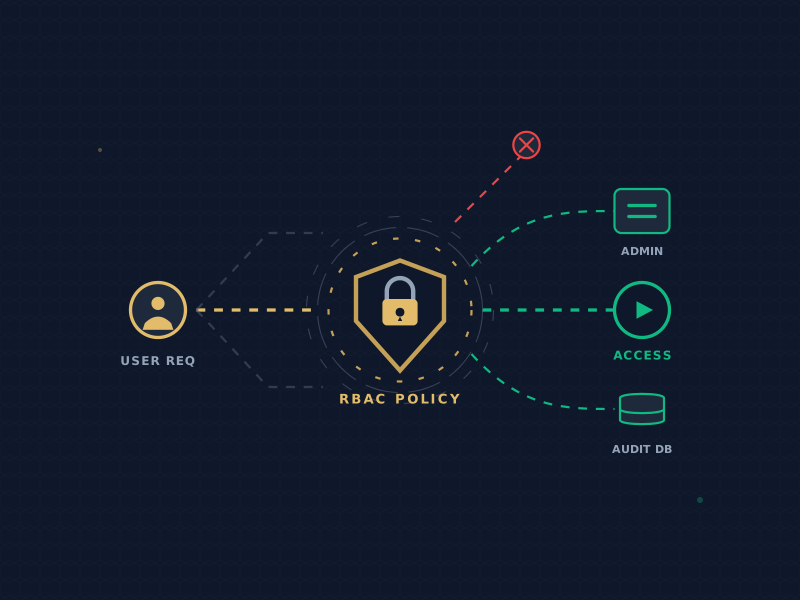
As SaaS platforms grow, managing who can access what becomes significantly more complex than simple authentication.
This is especially true in regulated industries, where systems must enforce strict access controls to meet regulatory standards.
Many teams start with basic role checks for “admin”, “user”, “viewer” which are embedded directly into application logic. This works initially, but as the system evolves, it quickly becomes difficult to maintain, audit and scale.
For CTOs and product leaders, the real challenge is not implementing role-based access control (RBAC) in frameworks like Spring Boot, it’s designing it in a way that supports:
- Multi-tenancy
- Compliance (e.g., GxP, 21 CFR Part 11)
- Fine-grained permissions
- Long-term system evolution
This blog explores where typical RBAC implementations fall short and how to design a more robust, scalable approach using Spring.
Why Basic RBAC Implementations Fail
1. Hardcoded Roles and Permissions
A common starting point is defining roles directly in code:
ROLE_ADMIN
ROLE_USER
ROLE_MANAGER
While simple, this approach introduces rigidity:
- Any role change requires a code deployment
- Business teams cannot manage permissions dynamically
- Scaling to complex workflows becomes difficult
In regulated systems, this also creates challenges for auditability and change tracking, as role definitions are not easily versioned or reviewed.
2. Lack of Granular Control
Most basic implementations stop at role-level checks:
“If user is admin, allow access”
However, real-world systems require:
- Field-level access (e.g., view vs edit lab results)
- Workflow-based permissions (e.g., approval steps)
- Context-aware access (e.g., tenant-specific roles)
Without this granularity, systems either become:
- Too restrictive (blocking productivity), or
- Too permissive (introducing security risks)
3. Ignoring Multi-Tenancy
In SaaS platforms especially multiple organizations (tenants) operate within the same system.
A naive RBAC implementation often:
- Shares roles globally
- Fails to isolate tenant-specific permissions
This leads to:
- Data access risks
- Complicated permission overrides
- Difficulty onboarding enterprise clients with custom access models
4. Compliance and Audit Gaps
For regulated industry environments, access control is not just about security, it’s about compliance.
Regulatory expectations include:
- Clear user-role mapping
- Audit trails for permission changes
- Controlled access to sensitive data
Basic RBAC implementations rarely address these requirements, leading to compliance risks during audits.
A Better Approach: Scalable and Compliant RBAC in Spring
A modern RBAC design should move beyond static roles and adopt a dynamic, policy-driven model.
1. Decouple Roles from Permissions
Instead of hardcoding roles, define:
- Roles → Collections of permissions
- Permissions → Atomic access rights (e.g., READ_SAMPLE, APPROVE_RESULT)
Store these in the database, allowing:
- Dynamic updates without deployment
- Fine-grained control
- Easier auditing
This also aligns better with enterprise expectations, where roles evolve over time.
2. Introduce Tenant-Aware Access Control
In multi-tenant systems, roles should be scoped per tenant:
- A user can be an “Admin” in one organization
- And a “Viewer” in another
This requires:
- Tenant-role mapping tables
- Context-aware authorization checks
Spring Security can be extended to include tenant context in the authentication principal, ensuring isolation and correctness.
3. Use Method-Level Security Strategically
Spring provides powerful tools like @PreAuthorize for enforcing access control at
the service layer.
A clean approach is to:
- Keep controllers lightweight
- Apply authorization rules at the business logic layer
Example:
@PreAuthorize("hasAuthority('APPROVE_RESULT')")
public void approveLabResult(Long resultId) {
    // business logic
}
This keeps security:
- Centralized
- Readable
- Consistent across the application
4. Add Auditability by Design
In regulated systems, every access-related action should be traceable.
Key considerations:
- Log role and permission changes
- Maintain historical records (who changed what, when)
- Ensure logs are immutable and reviewable
On AWS, services like CloudTrail or centralized logging pipelines can support this, but the application must first emit the right events.
5. Plan for Evolution: RBAC to ABAC
As systems mature, RBAC alone may not be sufficient.
Advanced use cases often require Attribute-Based Access Control (ABAC):
- Access based on user attributes, resource attributes, or context
- Example: “Allow access if user belongs to the same study or project”
Designing RBAC with flexibility allows a smoother transition to hybrid models when needed.
Real-World Considerations
Performance Impact
Authorization checks happen frequently and must be efficient.
Best practices include:
- Caching user permissions (e.g., using Redis)
- Minimizing database calls during request processing
- Preloading roles/permissions during authentication
Poorly designed RBAC systems can become a bottleneck under scale.
Security Risks
Improper RBAC implementation can lead to:
- Privilege escalation
- Unauthorized data access
- Cross-tenant data leakage
Regular security reviews and automated tests are essential to validate access rules.
Integration with Existing Systems
In large systems, RBAC often needs to integrate with:
- Identity providers (e.g., SSO, OAuth2)
- Legacy systems
- External audit tools
Spring Security provides flexibility here, but integration must be designed carefully to maintain consistency.
Common Pitfalls to Avoid
- Treating RBAC as an afterthought rather than a core design component
- Over-relying on roles without defining clear permissions
- Ignoring tenant isolation in multi-tenant systems
- Embedding authorization logic across multiple layers (leading to inconsistency)
- Failing to implement audit trails for compliance
Conclusion
Role-based access control is not just a security feature, it is a foundational part of system architecture, especially in SaaS platforms and regulated domains.
A well-designed RBAC system:
- Scales with your product
- Supports compliance requirements
- Enables flexibility without compromising security
Frameworks like Spring Boot and Spring Security provide the building blocks, but the real value lies in how you design and structure your authorization model.
Final Thought
The goal is not just to restrict access, it’s to enable the right people to do the right things, securely and efficiently.
Organizations that get this right early avoid costly rework, compliance issues and security risks later.
Related Insights
In the Age of AI, Human Accountability Is the Competitive Advantage
In regulated industries, AI accelerates delivery but cannot replace human accountability. Learn why operator-led engineering teams remain the critical differentiator.
The Hidden Cost of Outsourcing Your Business in India
Outsourcing can either accelerate your business or quietly weaken its foundation. Discover why small early decisions matter.
Start the Conversation
If you are a technology or engineering leader wondering when the right time is, what the right structure looks like, or whether the economics work at your scale, those questions are answerable. Not in a whitepaper, but in a direct conversation with engineers who don't just advise on capability centres, but actively build and operate them.
[email protected]No proposals. No scope documents. Just a direct conversation.