Why Your Outsourcing Partner Feels Like a Vendor And What to Do About It
You did everything right. You evaluated vendors, checked references, negotiated the contract, ran the pilot. The first few months were fine. And then, gradually, the relationship started feeling transactional.
Tickets go in, output comes back, but nobody on the offshore team really understands what you are building or why. They deliver to the spec, but they never challenge it. They hit the sprint commitments, but the code feels like it was written by someone who will never maintain it.
This is not a people problem. The engineers on the other side are capable. The problem is structural.
The vendor incentive misalignment
When you engage an outsourcing vendor, you are hiring a company whose business model depends on billable hours. Their incentive is to keep the engagement running and to keep the team staffed. Your incentive is to ship product.
These incentives align superficially, you both want the work to continue but they diverge in important ways. When you need to reduce the team by two people, that is a revenue hit for the vendor. When a senior engineer on the team gets a better offer, the vendor might move them to a higher-paying client. When you push for architectural improvements that reduce long-term maintenance, the vendor sees fewer billable hours.
None of this is malicious. It is just the economics of the model. The vendor's customer is their own revenue line and you are the source of it.
The governance gap
Most outsourcing engagements start without a governance framework. There is a contract, a kickoff and then people start working. The assumption is that governance will develop organically.
It does not. What develops organically is entropy. Without defined reporting cadences, escalation paths, KPI reviews and accountability structures, the offshore team gradually drifts into a parallel operation that runs adjacent to your engineering org rather than inside it.
What the alternative looks like
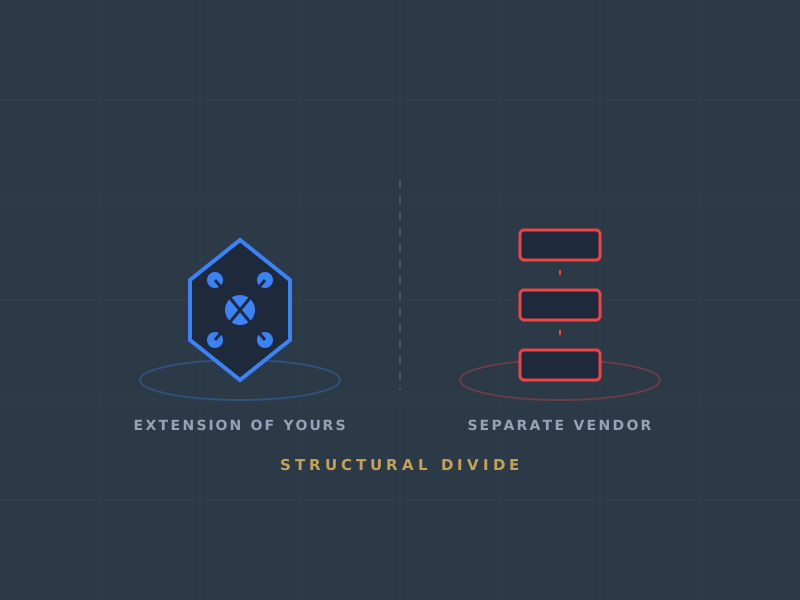
The fix is not finding a better vendor. The fix is changing the model. Instead of engaging a company that provides people, you engage a company that builds a team that is structurally yours.
In a dedicated pod model sometimes called a Micro-GCC the team is hired exclusively for you, reports into your engineering org, follows your processes and has no other client. The provider handles operations, compliance and facilities, but the team's accountability is to you.
The difference is subtle on paper but dramatic in practice. When the team knows they are yours, when they are in your Slack, on your Jira board and attending your retros they stop behaving like a vendor. They start behaving like colleagues.
Making the switch
If you are already in an outsourcing engagement that is not working, the transition is not as disruptive as it sounds. A good Micro-GCC provider can absorb your existing offshore team members (if they are good) or recruit replacements within a few weeks. The key is to define the governance structure before the transition, not after.
Start with clarity on three things: who the team reports to, what the delivery cadence looks like and how performance is measured. Get those right and the team dynamics change almost immediately.
Related Insights
In the Age of AI, Human Accountability Is the Competitive Advantage
In regulated industries, AI accelerates delivery but cannot replace human accountability. Learn why operator-led engineering teams remain the critical differentiator.
The GCC Gap: Why Mid-Market Technology Companies Can No Longer Afford to Wait
Enterprise companies have GCCs. Mid-market companies haven't had a viable alternative. Humalligence explains why that gap is closing.
Start the Conversation
If you are a technology or engineering leader wondering when the right time is, what the right structure looks like, or whether the economics work at your scale, those questions are answerable. Not in a whitepaper, but in a direct conversation with engineers who don't just advise on capability centres, but actively build and operate them.
[email protected]No proposals. No scope documents. Just a direct conversation.